We're asking the Premier League to ditch domestic flights
The vast majority of Premier League journeys can be made by coach in under four and a half hours. Yet some of the top teams are choosing to use private jets - driving up carbon emissions and threatening our progress to creating the zero carbon Britain we need. So we’re taking action to tackle football’s flight problem - will you help?
Read More
Eleven amazing things you did for the climate in 2023
We’re winding down for a rest at the end of another huge year of climate action, but before we do - we wanted to look back at everything we’ve achieved together in 2023.
Read More
Our formal complaint against airline greenwash.
Our lawyers have just filed formal complaints about British Airways and Virgin Atlantic. They are misleading the public about their environmental actions, downplaying the harm they’re causing to our climate, and pretending they can meet emissions targets without cutting back on flights. This is slowing down progress towards a zero carbon Britain, and we’re not having it.
Read More
Myth buster: Who's driving the most polluting vehicles?
When Rishi Sunak scrapped the phaseout date for new petrol and diesel car sales last month, we saw an ugly yet familiar narrative raising its head - the myth that action against high carbon vehicles is an attack on the poor.
We crunched the numbers and found this isn’t the case. In fact, when it comes to greenhouse gases, it's the complete opposite.
Read More
Released: Our visions for London's newest Thames crossing
London's getting a new Thames crossing - we think it should be car-free. See our proposals for a car-free, toll-free crossing which is good for Londoners, good for our air quality, and good for our climate.
Read More
Riders on the Storm: The end of our Car Free Cities campaign
On 19th July, we ran a hybrid event for councillors, council officers, campaigners and stakeholders on delivering successful urban traffic reduction.
Read More
A new permanent parklet is now open in Hackney. We want to create four more.
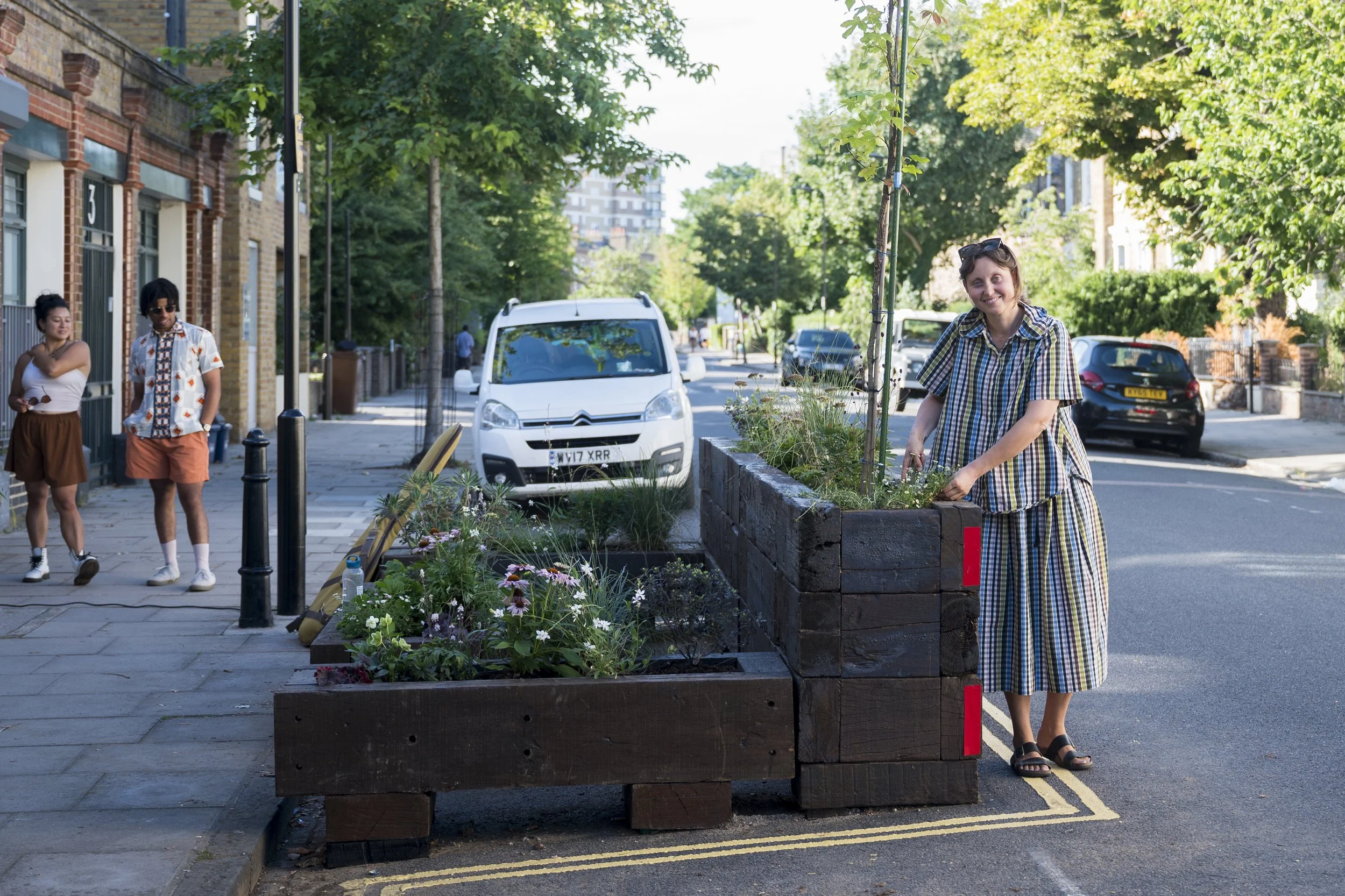
We successfully opened a permanent community parklet in Hackney, complete with a successful launch event featuring local residents, canapes, and music. A parklet is a tiny park set up in place of a parking space offering greenery, a place to sit, meet people, and connect with local communities.
Read More
Play our newly-launched climate action board game
We've launched a new version of our climate action-themed board game, Carbon City Zero. Carbon City Zero: World Edition is a brand new edition of our climate action game which allows 1-4 people (aged 8+) to work together in developing a sustainable city through transport, industry, and getting their citizens on board.
Read More
LTNs associated with a decrease in overall volumes of traffic and increased road safety
A new report commissioned by us and written by members of the Westminster Active Travel Academy has summarised the new and emerging evidence on Low Traffic Neighbourhoods (LTNs) in London and why they’re necessary.
Read More
The true cost of frequent flyer reward schemes
Our new report has found that achieving lifetime membership status of a frequent flyer programme (FFP) could require emitting more than 1,800 tonnes of greenhouse gases per person.
Read More
Jetting away with it: How private jets pollute the most and pay the least
We all know that flying is bad for the climate - but how bad are private jets? We crunched the numbers to find out - and they’re even worse than we thought!
Read More
New analysis shows supporting LTNs does not lead to London councilors losing seats
New analysis commissioned by us and conducted by the Active Travel Academy, Westminster University has found that London councilors representing areas with Low Traffic Neighbourhoods who tweeted about LTNs were no more or less likely to hold their seat in the 2022 local elections than those who did not tweet about LTNs.
Read More
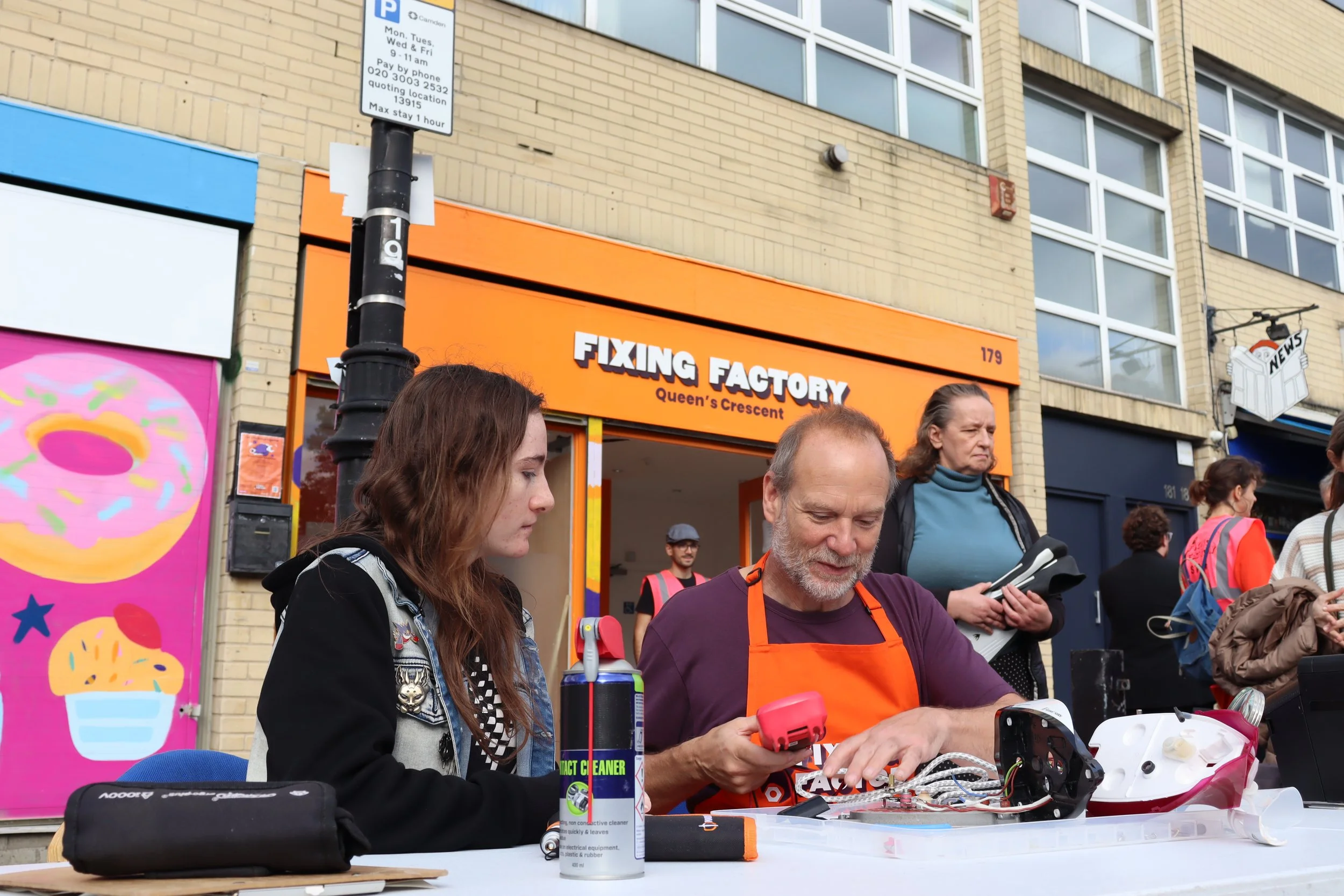
Fixing Factory: The first six months
The Fixing Factory in Queen’s Crescent, Camden, has now been open for six months! We spoke to Dermot, the project manager of the Fixing Factory, to ask him about his experiences in these first six months.
Read More
Brompton offers Mayors e-bikes to replace polluting vehicles as new data reveals worst offenders on Clean Air Day
At a time when the Government is aiming to switch half of all short trips in towns and cities to walking and cycling, mayors need to lead by example and make the change themselves. Especially when new data shows several councils are still using particularly high-polluting vehicles to carry out official duties.
Read More
Electric vehicle charging rollout is posing a growing threat to walking, wheeling and disabled access
A new report we commissioned with support from Disabled cycling charity Wheels for Wellbeing, has found that electric vehicle charge points in London are “invading pavements” with significant impacts on anyone making walking or wheeling trips, especially Disabled people.
Read More
We're calling on councils to explore a car-free transport solution for Hammersmith Bridge
We’re calling on Hammersmith and Fulham and Richmond Councils to agree to a full feasibility study for our car-free alternative to reopening Hammersmith Bridge to motor traffic. In the four years since excess motor traffic broke Hammersmith Bridge and it was forced to close to cars, vehicle counts show that traffic has actually fallen across southwest London, even in key places where some local people believe it has got worse.
Read More