
Where People Want Parklets
What’s the best place to put a parklet? That’s the question we asked in September 2022 when we launched the Parklet Plotter - an interactive tool that lets you explore your neighbourhood and find an ideal spot to convert a car parking space into something for a community to enjoy.
Four years later, more than 1,000 parklets have been plotted - with submissions from all over Europe and beyond. The enthusiasm that people have shown for parklets convinced us that we should mark this milestone by taking a deeper look at where people want parklets, and what those findings can tell us about achieving greener streets in more cities here in the UK.
Where are the most parklets plotted?
First, let’s take a look at where all of those plotted parklets in the UK are located.
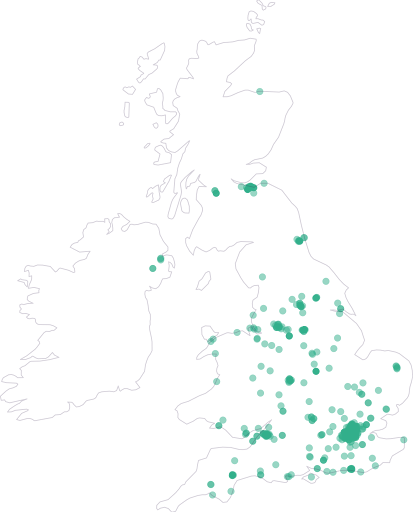
Map of United Kingdom with green dots representing locations where parklets have been plotted.
You can see that by far the most parklets were plotted in London (650 of them), which is no surprise as that’s the UK’s most populous city. But the story doesn’t end there. Parklets were also plotted in great numbers in Edinburgh (65) and Bristol (37), and proved popular in Manchester (15), Sheffield (14), Brighton (12), and Newcastle (12) too. Here’s the list of the top ten cities and London boroughs by the number of parklets plotted.
Lambeth
Edinburgh
Southwark
Bristol
Hackney
Lewisham
Waltham Forest
Haringey
Tower Hamlets
Islington
And here’s a list of the top cities with London boroughs excluded.
Edinburgh
Bristol
Manchester
Sheffield
Brighton
Newcastle
Leeds
Birmingham
Exeter
Bournemouth
We can’t say for sure that these are the places where parklets are most popular. The rankings may merely reflect where the Parklet Plotter most successfully reached local residents. But what it does show is that where local groups organise around parklets as an issue, people respond to that issue with specific street-level proposals.
Deprivation and parklets
We looked at the demographics of the places with the most plotted parklets on the map, comparing the number of parklets plotted with doorstep access to green space, car ownership, and deprivation. The strongest correlation came with deprivation - in both the most and least deprived areas, parklets were far less likely to be plotted than average. But in areas in between - with medium levels of deprivation - almost twice as many parklets were plotted than average.
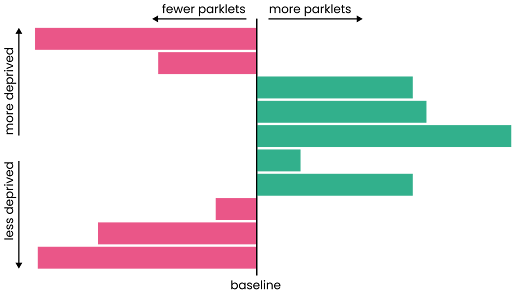
Bar chart showing correlation between numbers of parklets plotted and level of deprivation.
What is a parklet, anyway?
Parklets come in many shapes and sizes, and can be used for rest, play, to store cycles, or grow fruit and veg - they offer an opportunity for communities to come together and take ownership of their streets.
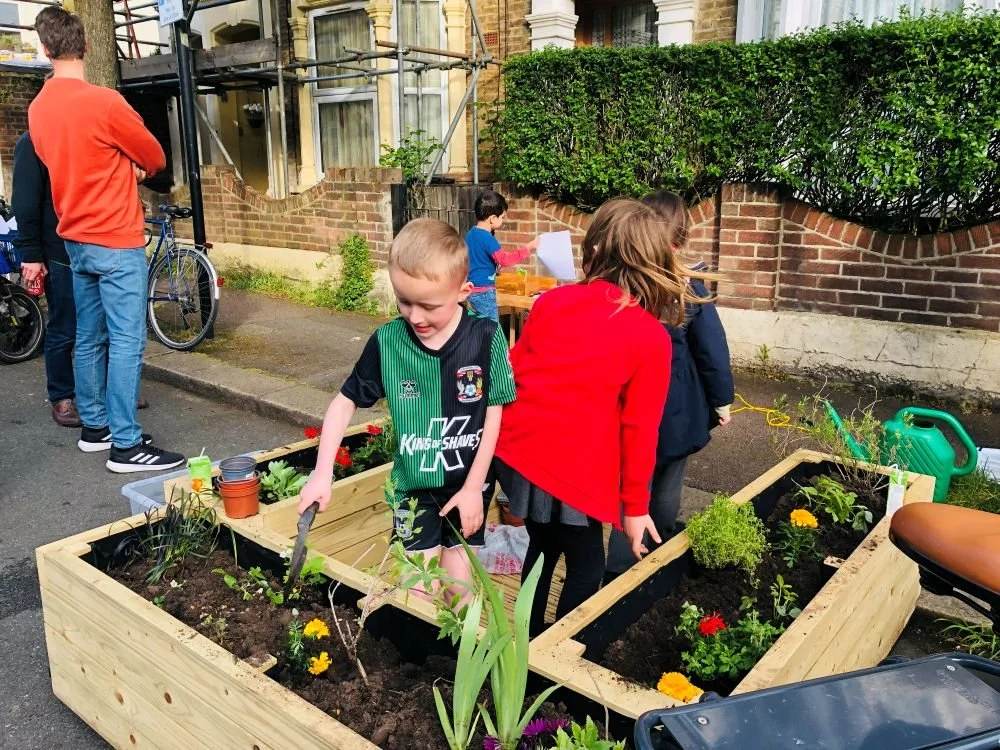
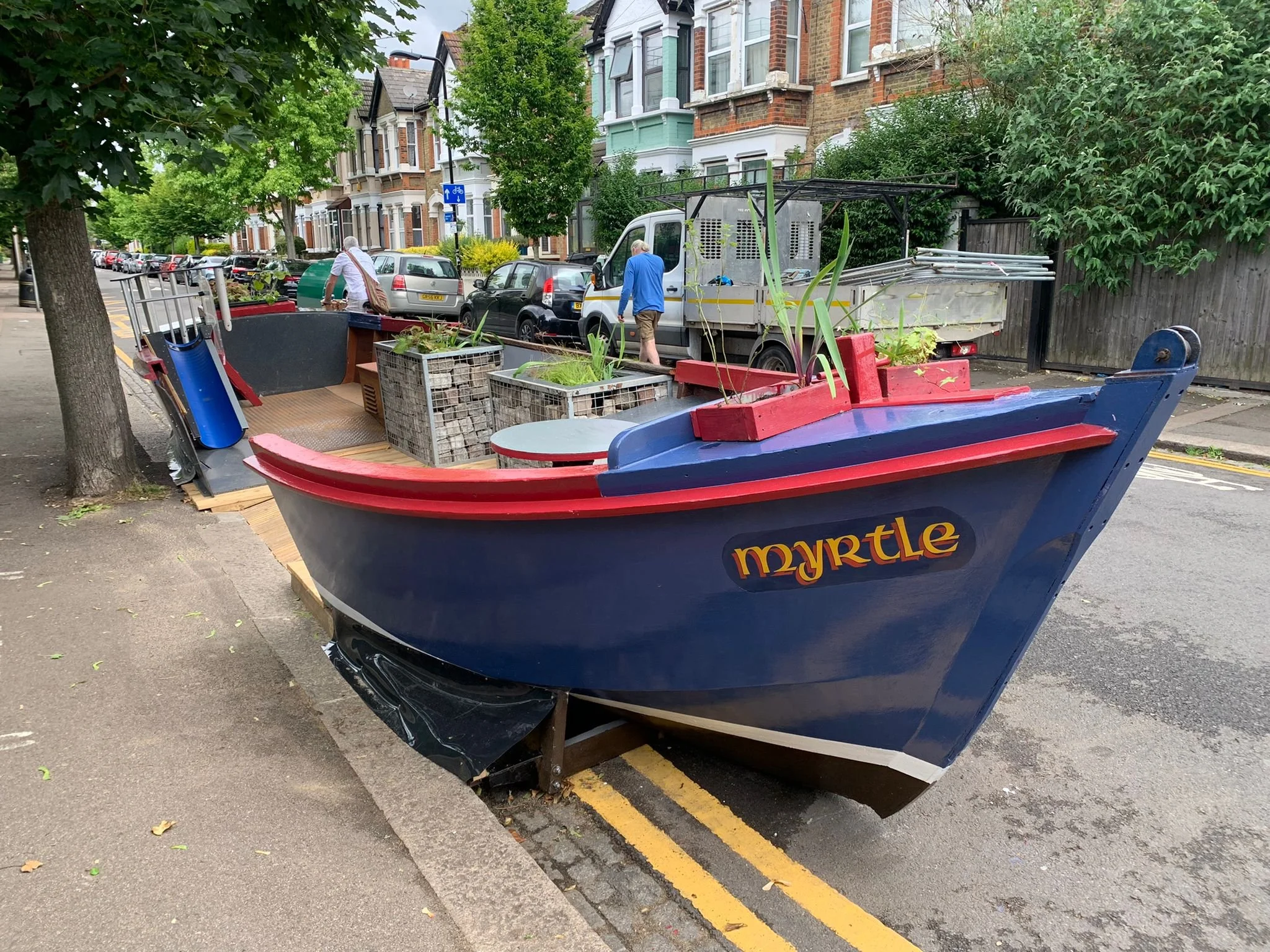
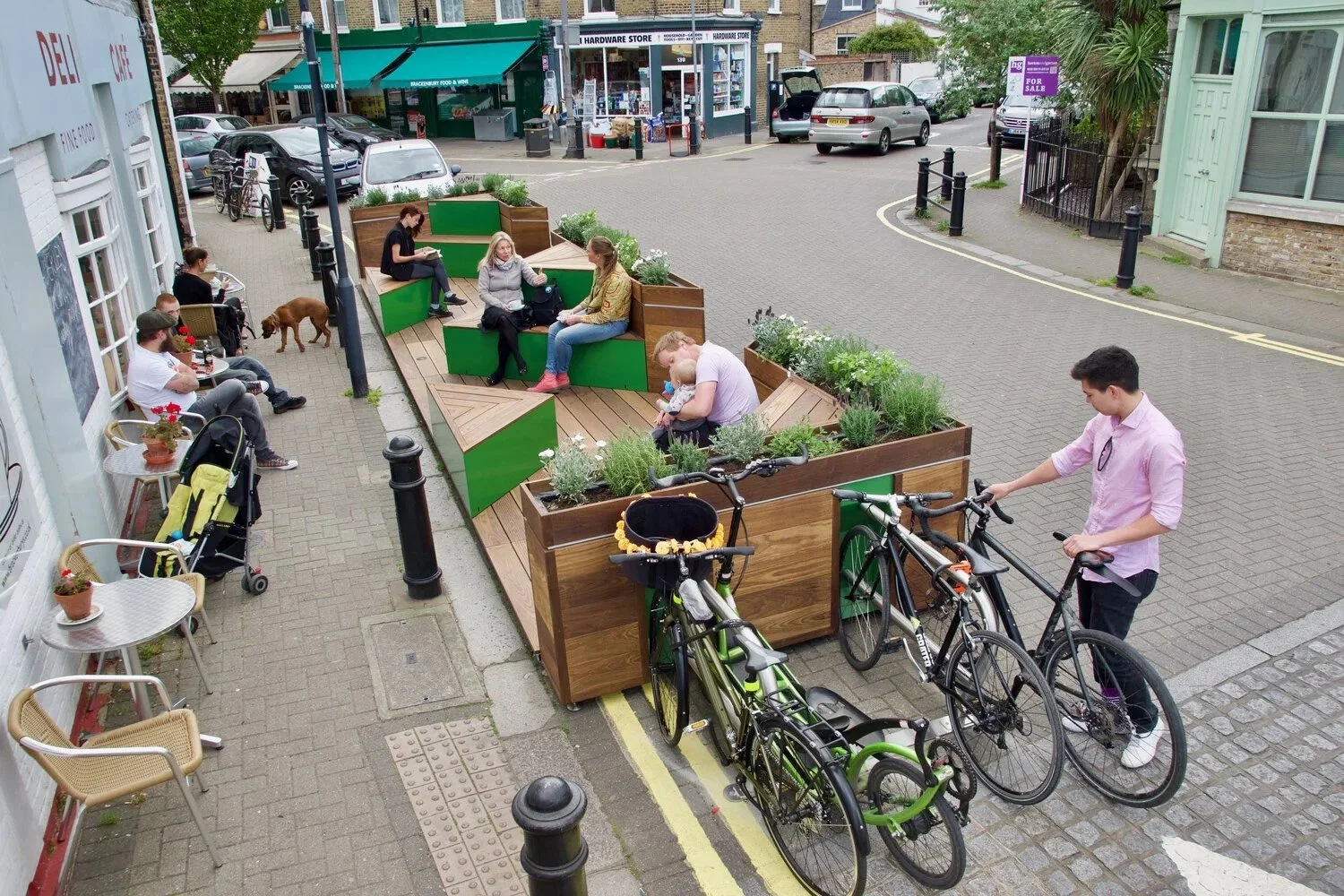
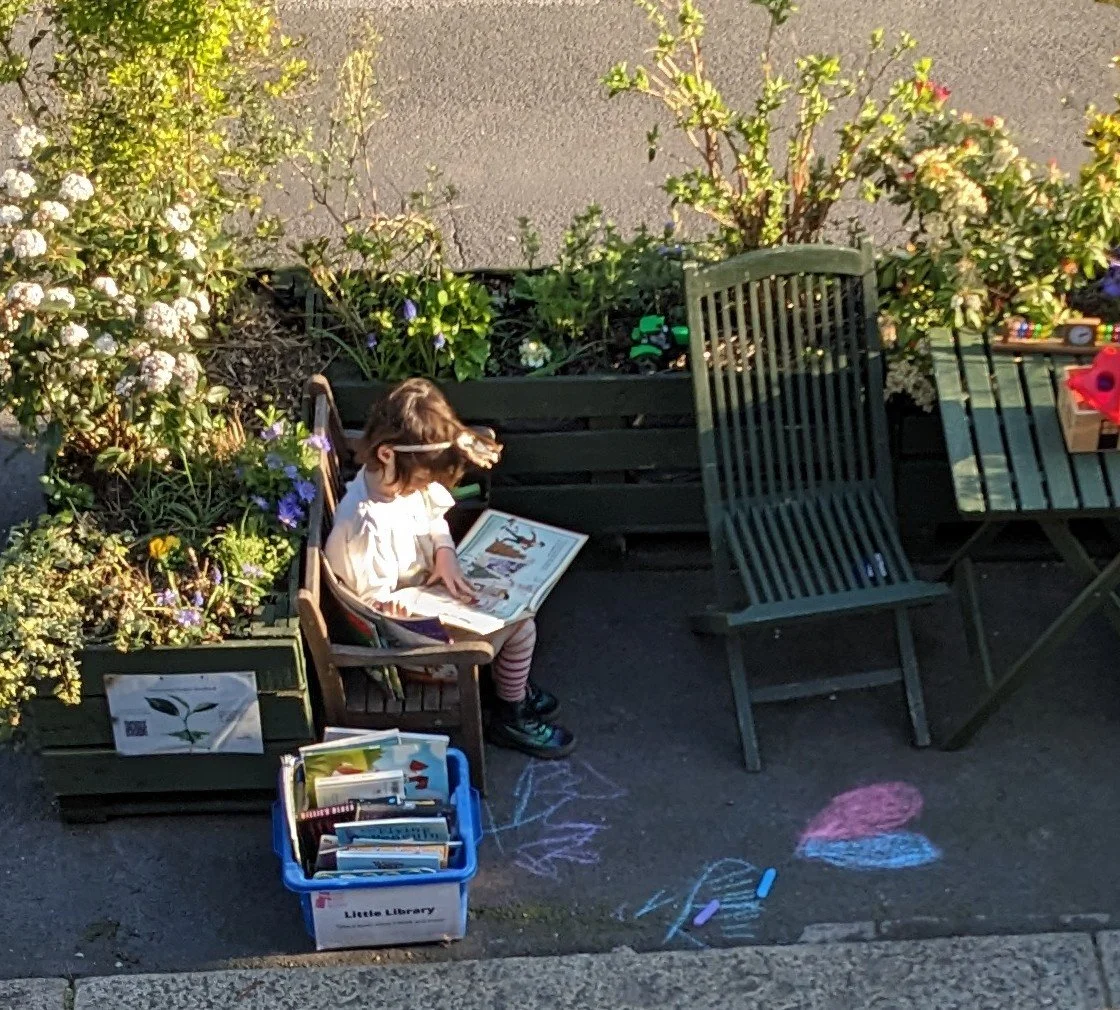
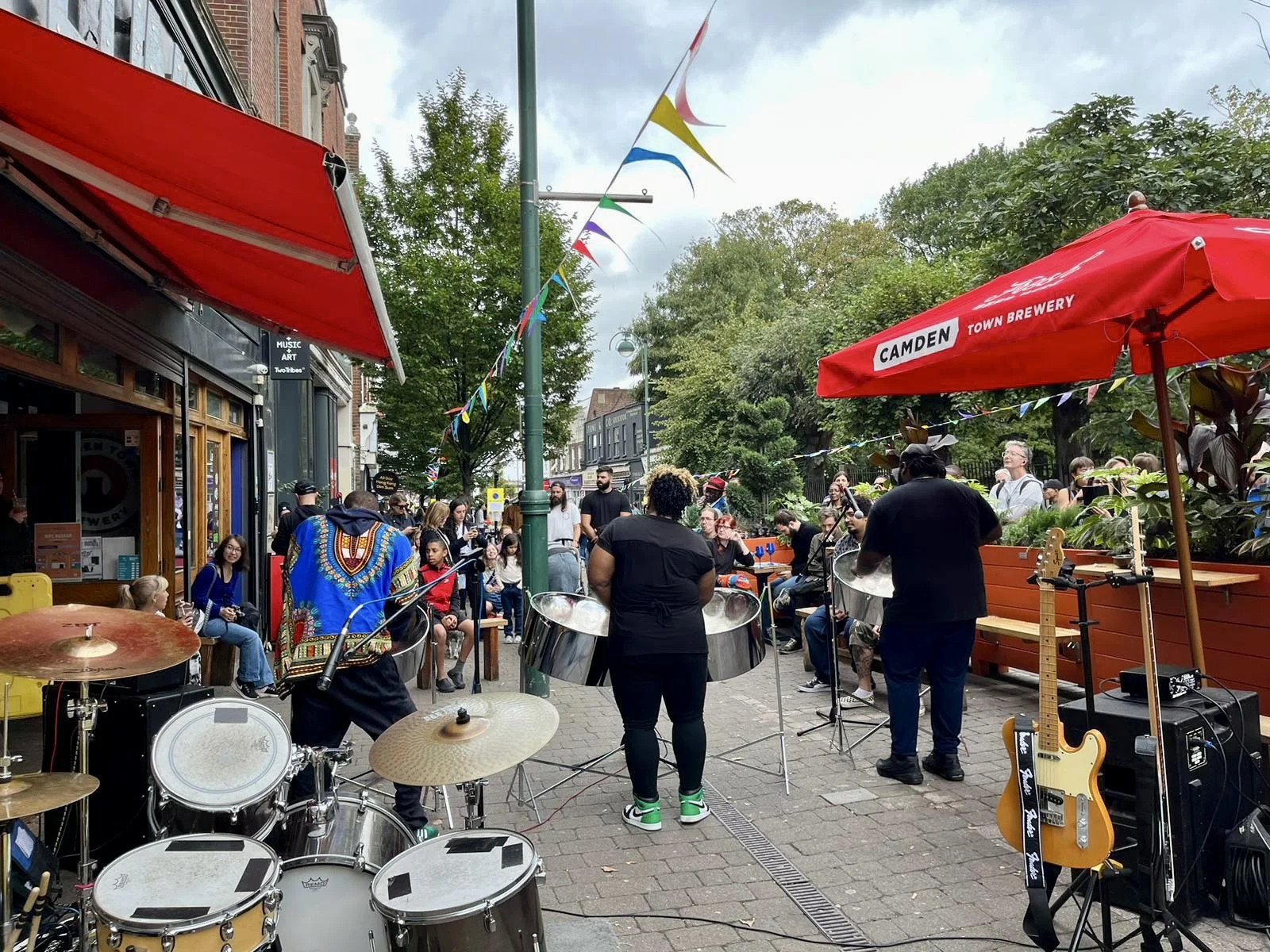
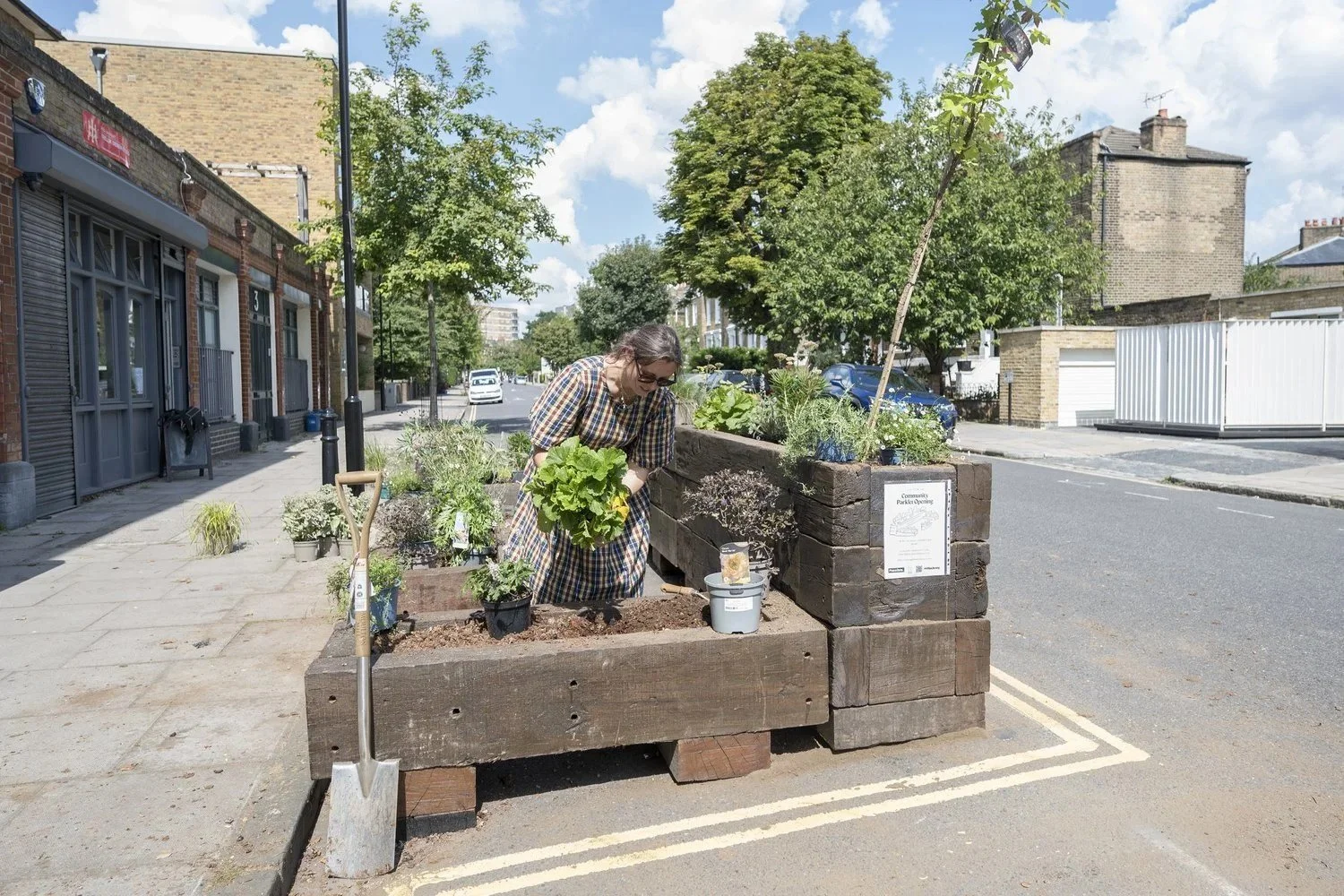
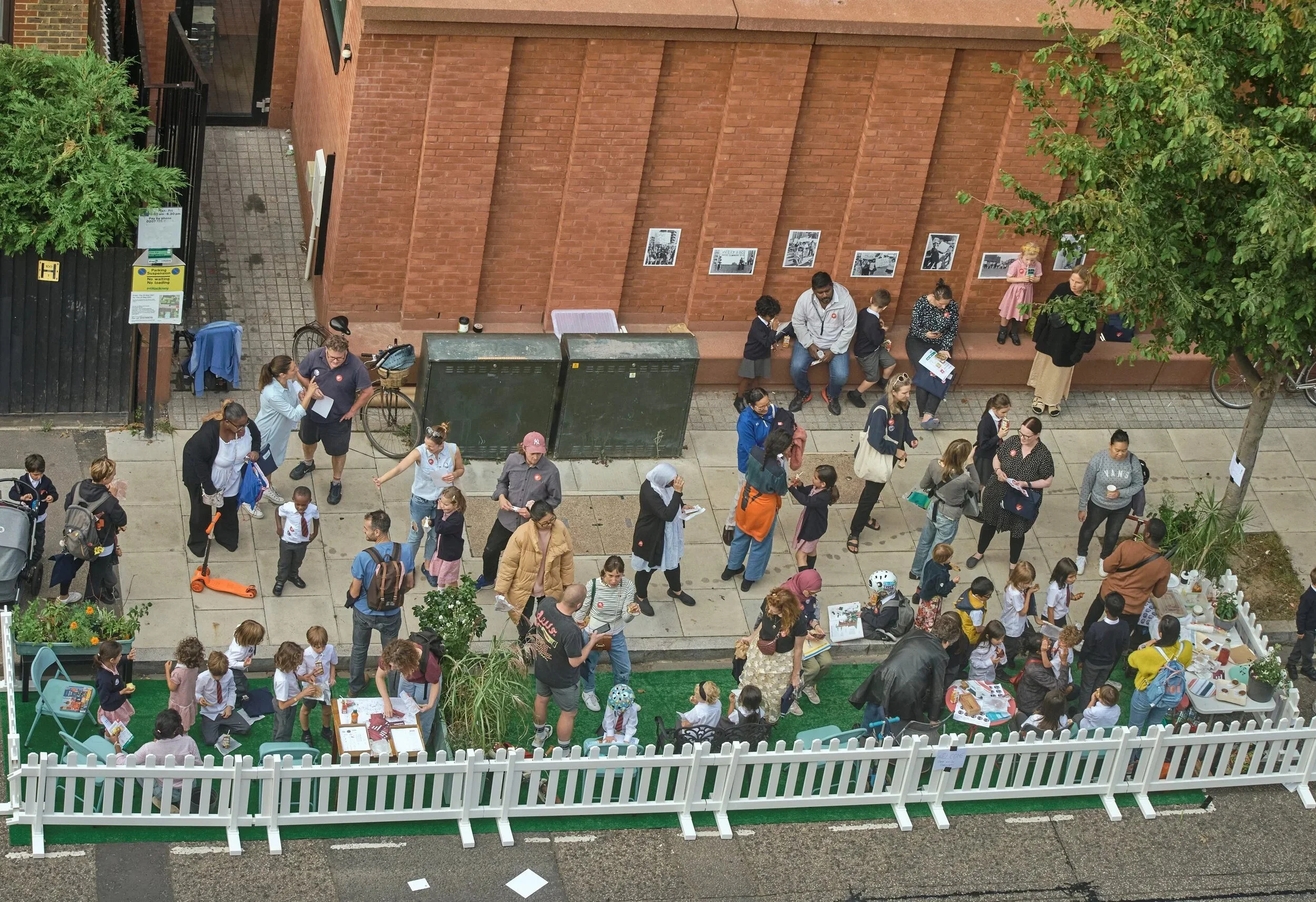
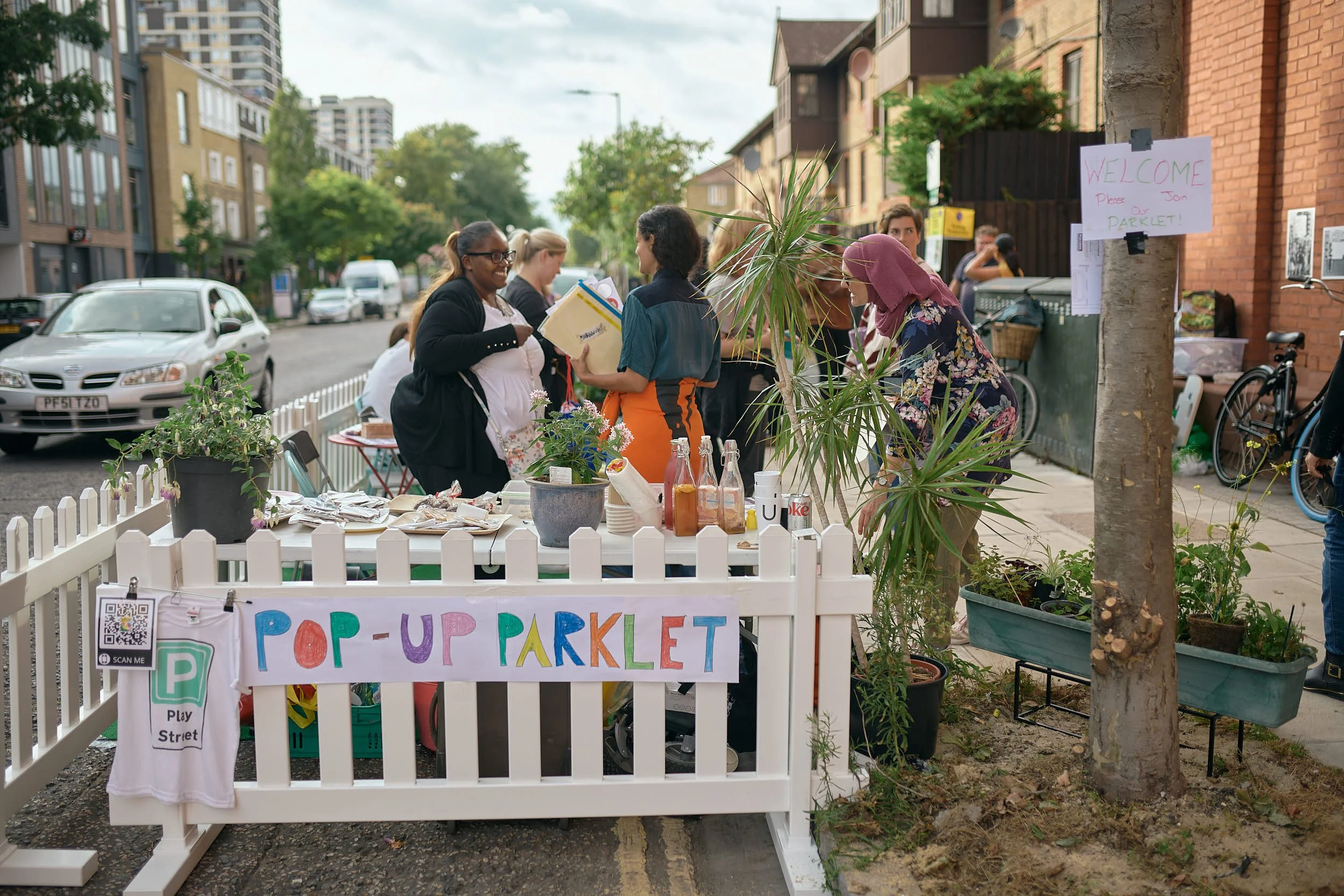
In recent years, Possible has published parklet toolkits for communities and local authorities, co-created three new community parklets in London, and campaigned for local authorities to introduce parklet permits to make it easier for communities to give street space back to people and nature.
But that’s just the beginning. Parklets are one part of our broader vision for greener streets across our nation. They serve as a crucial middle step - a visible, achievable intervention that sits between raw tarmac occupied by a parked car and more permanent actions such as rain gardens, street trees, or sustainable drainage.
What’s more, parklets are a rallying point for communities: tangible enough to campaign for, transformative enough to change how people see their streets.
A thousand plotted parklets represent a thousand moments where someone looked at a parking space and imagined something better.
Now isn’t that something to celebrate?
If you’d like to support our work bringing greener streets to communities across the UK, please consider donating a few pounds a month. Small, regular donations give us the security to build meaningful long-term change.
If you’d like to explore the parklet data, you can find it here, and if you want to plot a parklet yourself or zoom into the map for more detail, then visit the Parklet Plotter.
Finally, if you’d like to follow our progress, sign up to our newsletter.
Thanks for reading!
At Possible, we build climate action that makes a real difference in the here and now: cheaper bills, safer streets, cleaner air. Then we tell those stories loudly, all across the country. We can’t do this alone.