The Case for Kerbside Greening
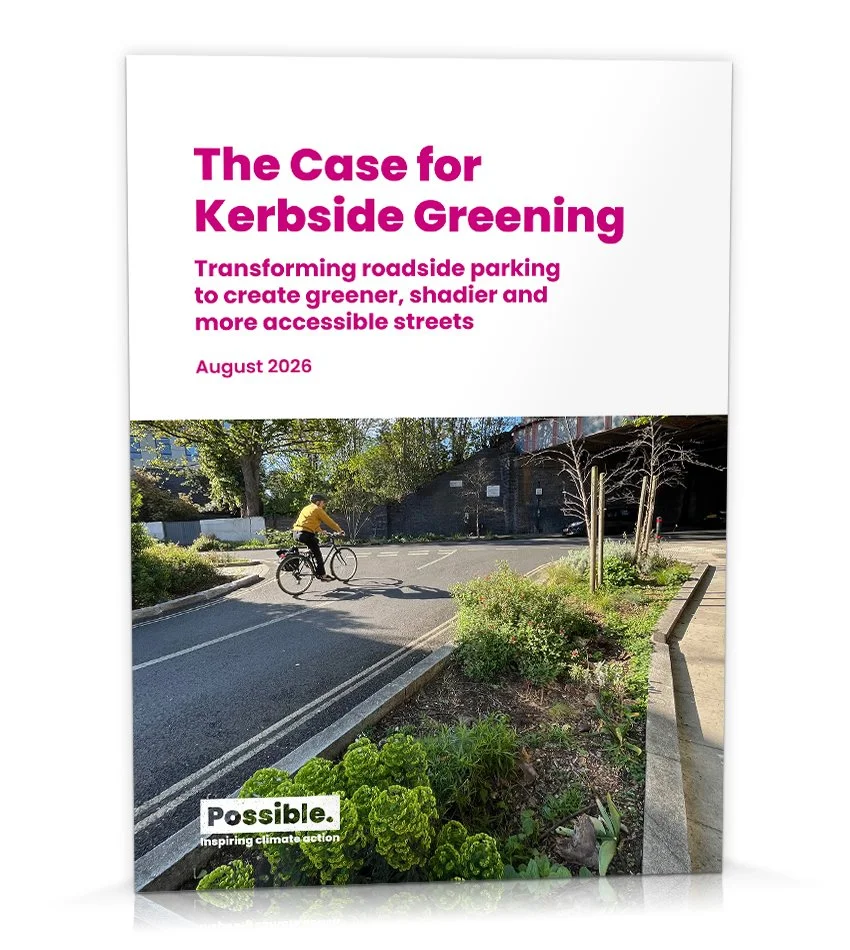
We teamed up with the University of Westminster's Active Travel Academy, to explore how reallocating on-street parking spaces for trees and other greenery can help make London’s streets more resilient to extreme heat and other climate impacts.
Drawing on interviews with councillors, council officers and others who are already working on kerbside greening in their areas, and with local communities in one of London’s most heat vulnerable Boroughs, the report sets out the benefits of kerbside greening and offers practical recommendations for councils looking to create cooler, healthier and more resilient streets.
Key findings:
Trees and other greenery make streets more climate resilient by creating shade (which reduces street temperatures by up to 8 degrees in summer) and absorbing surface water (reducing flood risk).
Reallocating car parking spaces for trees and rain gardens is a practical way to increase urban greening where space is limited.
Planting on the carriageway (eg through kerb build-outs) avoids narrowing pavements, making it a more accessible approach than the historic practice of planting trees on pavements.
The areas most vulnerable to extreme heat often have the least access to trees and shade, and low levels of car ownership, making kerbside greening an important climate justice issue.
Communities value greener streets for the health, safety and quality of life benefits they provide.
The report identifies barriers to implementation and makes recommendations to help local authorities deliver kerbside greening at scale.
Why this report matters
As the climate crisis accelerates, we need to do more than reduce emissions — we must also adapt our streets to the impacts that are already being felt in our communities. During recent heatwaves, some unshaded London streets reached surface temperatures of 57°C. These temperatures make walking uncomfortable and, for many people, dangerous.
This report shows that a relatively simple change to how we use road space can make a significant difference. By prioritising trees and greenery over some parking spaces, councils can create streets that are cooler, healthier, more accessible and better able to withstand climate impacts, while improving everyday life for residents.
At Possible, we campaign for streets that put people, nature and the climate first. This research provides practical, evidence-based recommendations to help local authorities accelerate climate adaptation while supporting healthier, fairer communities.
This project is funded by the City Bridge Foundation. For more information contact carolyn@wearepossible.org.